
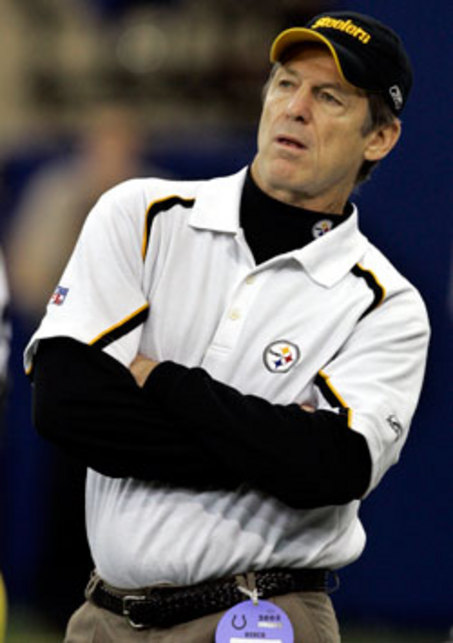
I spoke recently with a friend of mine about the nature of strategy. Actually, it was about football, but somehow led into strategy, and I thought it was interesting enough to share.
Most people use the word “strategy” incorrectly. They think any sort of plan means “strategy”. As in, “What’s our strategy for increasing leads from the website?” Or, “What is your strategy for getting better reporting from the accounting system?”
I think of strategy as something far more fundamental: it’s the general philosophy of how you win. It turns out, there are only two kinds of strategies: doing the unexpected, and better execution. Everything else is detail.
And y’know, I think at least in real estate industry, most people have very little idea of how they plan to win.
Winning and Strategy in the NFL
In the NFL, there are actually only two kinds of strategies. The first is doing something the other team does not expect. The people who come up with these kinds of new innovative ways of overcoming a defense, or disrupting the offense, go down as geniuses.
For example, the zone blitz schemes of Dick Arnsparger and Dick Lebeau is based on doing something the other team’s quarterback and the offensive line do not expect… even when they expect to be surprised. Just about any defensive player could be blitzing the quarterback, from unexpected angles, while 350-lb offensive linemen drop into coverage to intercept the hurried-up pass.
Bill Walsh’s West Coast Offense was another such surprise-based strategy. At a time when most football offenses revolved around running the football, then launching long vertical passing attacks, Walsh’s system emphasized short “dink and dunk” passes to gain a few yards here and there, to open up the running lanes and a surprise shot down the field. Walsh developed the West Coast Offense in Cincinnati because he had a quarterback with a weak arm, and a bad offensive line:
The time Walsh spent with Cincinnati Bengals seemingly gave Walsh a chance to develop his own coaching philosophy and to put them into practical application. At the time, Cincinnati was an expansion team that had Virgil Carter as its quarterback. Virgil Carter was a quarterback who had a great collegiate career at Brigham Young. Virgil Carter was only six feet tall and without a throwing arm, but he was a good runner. Back in those days from film I have seen, the Bengal’s weren’t strong enough on the offensive line to be able to run the ball well, Walsh decided that the best chance to win football games was to somehow control the ball. As a result, Walsh devised a ball-control passing game in the hope that if the Bengals could make 25 first downs in a given game and also had good special teams play, football games wouldn’t be hard to win.
The result is a system in which the short passes are in effect running plays where the quarterback ‘hands the ball off’ to a runner in front of the line of scrimmage, instead of behind it. A 2-yd pass could result in a gain of 4-yds, which wouldn’t be great as a passing play… but excellent as a running play.
Both of these strategies relied on doing something completely unexpected by opponents. They are both now mainstays of both the college game and the NFL, but when these strategies were introduced, opponents didn’t know how to deal with them. They violated fundamental understandings and conventional wisdom about how football has to be played.
In contrast, a number of teams have a strategy that revolves around simply better execution. The Green Bay Packers under Vince Lombardi truly made this approach iconic. Coaches like Rex Ryan of the New JERSEY Jets follow this strategy. Simply put, the idea is that the opponents know exactly what we’re going to do: we’re going to run the ball right up the middle. There’s no trickery here, nothing unexpected, but they still won’t be able to stop us because we’re going to out-execute them. We’re going to block better, we’re going to open holes, and we’re just going to be better at they are and pound the ball down their throats.
The out-execute them strategy requires two things: attention to detail, and total commitment. Techniques have to be drilled over and over and over again, until you reach perfect execution. Each and every player has to be totally, 100% committed to doing his job, so that the team as a whole can execute.
These are the only two types of strategies, not only in football, but in everything. Either you do something unexpected, or you do the expected, but you just do it better than everyone else. That’s it.
Implications
The implication for real estate is pretty simple, yet pretty profound. You hear talk of business models, of marketing strategies, of technology tools, and so on and so forth. But if you divide them into the Unexpected and the Execution buckets, what you come up with is that too often, the Unexpected is hardly that, and the Execution is deeply flawed.
For example, the Unexpected can’t simply be a small little variation on the standard tactics. “Hey, instead of running off-tackle, we’re gonna do a sweep!” It has to be something that insiders look at and go, “That’s crazy; it’ll never work”. It has to be something that makes you a fool, until it works, and then it makes you a genius. Dropping a 300-lb lineman to cover receivers is crazy; you’re a fool to even try it… until it works, and then you’re headed to the Hall of Fame.
Who knows what that looks like in business? Maybe it’s something crazy like, “We’re going to take orders, and then build a computer” when everybody knows that you can’t do things that way. Consumers want immediate gratification; they’re not going to wait days and weeks to get a frikkin’ computer when they can go down to the Best Buy and get one! Good thing that Michael Dell didn’t know that was crazy….
I do think, however, that a strategy based on doing the unexpected should be met with skepticism and derision by the “experts” and the “pros”. If not, it isn’t unexpected enough. So when real estate companies trumpet their INNOVATIVE NEW STRATEGY of using YouTube to promote homes for sale… I find it hard to resist the urge to yawn.
In contrast, the Execution bucket requires attention to detail and total commitment. Sadly, neither of those are in plentiful supply in our industry.
For example, there’s nothing wrong with a strategy that says, “Real estate is about delivering great service to the client, so we’re going to do just that.” It doesn’t matter that everyone else is trying to do the same thing — we’re just going to do it better than they are. But such an Execution based strategy would require the manager/owner to pay attention to the smallest detail: how does the receptionist answer each and every phone call? How much time elapses before we respond to an inquiry? How detailed a listing feedback do we get from each showing? How satisfied is each and every client, and prospective client, with each and every interaction with anybody from our company? Such a strategy, executed properly, would involve hours and hours of work, surveys, focus groups, talking to clients… just to measure the level of service delivery.
It would also require commitment. An agent — even a top producer — who screws up service delivery would get chewed out, perhaps sanctioned, and even fired. NFL coaches do not hesitate to take their biggest stars to task if they don’t execute perfectly; why would business owners? The agents themselves would buy in to the philosophy, and get really committed to delivering great service, better than anyone else. And not just the 20% who are producers, but the 80% who are striving to become producers too.
So As You Head Into that Next Strategy Session…
When you’re heading into your next strategy session, whether as a broker/manager, or an Association executive, or whatever… consider your strategy. Ask how you plan to win. If the strategy is based on doing the unexpected, then ask just how unexpected it is. Would your peers look at it and go, “You’re nuts” or would they nod their heads and say, “Yeah, that would work.” If the latter, go back to the drawing board. It isn’t unexpected enough.
If, on the other hand, the strategy is based on execution, then ask just how committed you and your organization are to out-executing the competition, and ask operational questions about attention to detail, enforcement, training, and repetition.
There’s a lot to be learned from the game of football….
-rsh


8 thoughts on “A Thought on Strategy”
Rob, when facilitating strategic planning I break things down into 1) Strategy 2) Tactics and 3) Action Plans. I find a lot of people mistake tactics and action plans (the next level down) for strategy.
One small area where perhaps I disagree with what you laid out. I think all strategies – expected or not – depend to some degree on tactical and action plan execution.
That’s my error, then; I did not mean to suggest that the “unexpected” does not require good execution. Without actual execution, no plan matters at all. But going the unexpected route, I do think you have a bit more leeway simply because no one else is going to try something so seemingly ridiculous… until you’ve succeeded.
Rob- Thanks so much for this.
The “unexpected” plan seems to have a lot in common with the “Blue Ocean Strategy.” When I read that book I really tried to come up with some real estate strategies, but I think there is a lot of success to be had by focusing on improving the execution,
One of my favorite “unexpected” plans was Kye Grace’s 72 hour open house which certainly did a fantastic job promoting his listing and his services.
http://www.futureofrealestatemarketing.com/2009/01/27/72-hours-to-sell-a-home/
No one I see in the residential real estate business pursues differentiation and low cost – a Blue Ocean Strategy. I think most brokerages would be hard pressed to write down the attributes that gives them an edge over the competition.
Crazy business – but disruption that can help separate a broker’s or agent’s business from the competition and then eliminate them is forthcoming. It will come in various models – one can be found at http://teardowns.com/.
Thanks
@Bhickey
I did the teardown model many years ago when the building boom was just starting. I recall it vividly. The managing brokers would call each agent into their office to ask them their business plan for the coming year. Bambi would reply she was going to sell $5 million over the next 12 months. The BM’s would say, That’s great, hun, let us know if we can help! Never was it uttered, “Bambi, you only did $1 million this year. How are you planning to achieve a 500% increase?
As a 20-year veteran of the local development business I had a database of about 200 builders. When I showed the BM’s a business plan based that enabled me to to control dozens of the best lots in town without having to put them into the MLS (I could sell them directly to builders and get the listing on the new house several months later), they responded, I don’t think that will work. Why don’t you just do what everybody else is doing?”
With that I left to start my own firm, selling $30 million in year one with no split commissions.
Independent, local stand-alone marketplaces that are open to all market participants will offer both differentiation and low cost – as you described and saw for yourself, the model works for redevelopment property and most likely will work for traditional homes as well.
Thanks
Nice timing. I have been struggling for a while with a new project. The more I have gotten involved with the groundwork the more I have begun to realize that this “project” could be much, much more than a one time gig. Rather, it could be a personal game-changer for me, and others. I have been reading quite a bit about strategy and execution of late. This post is quite helpful and right on target…Thanks
Comments are closed.