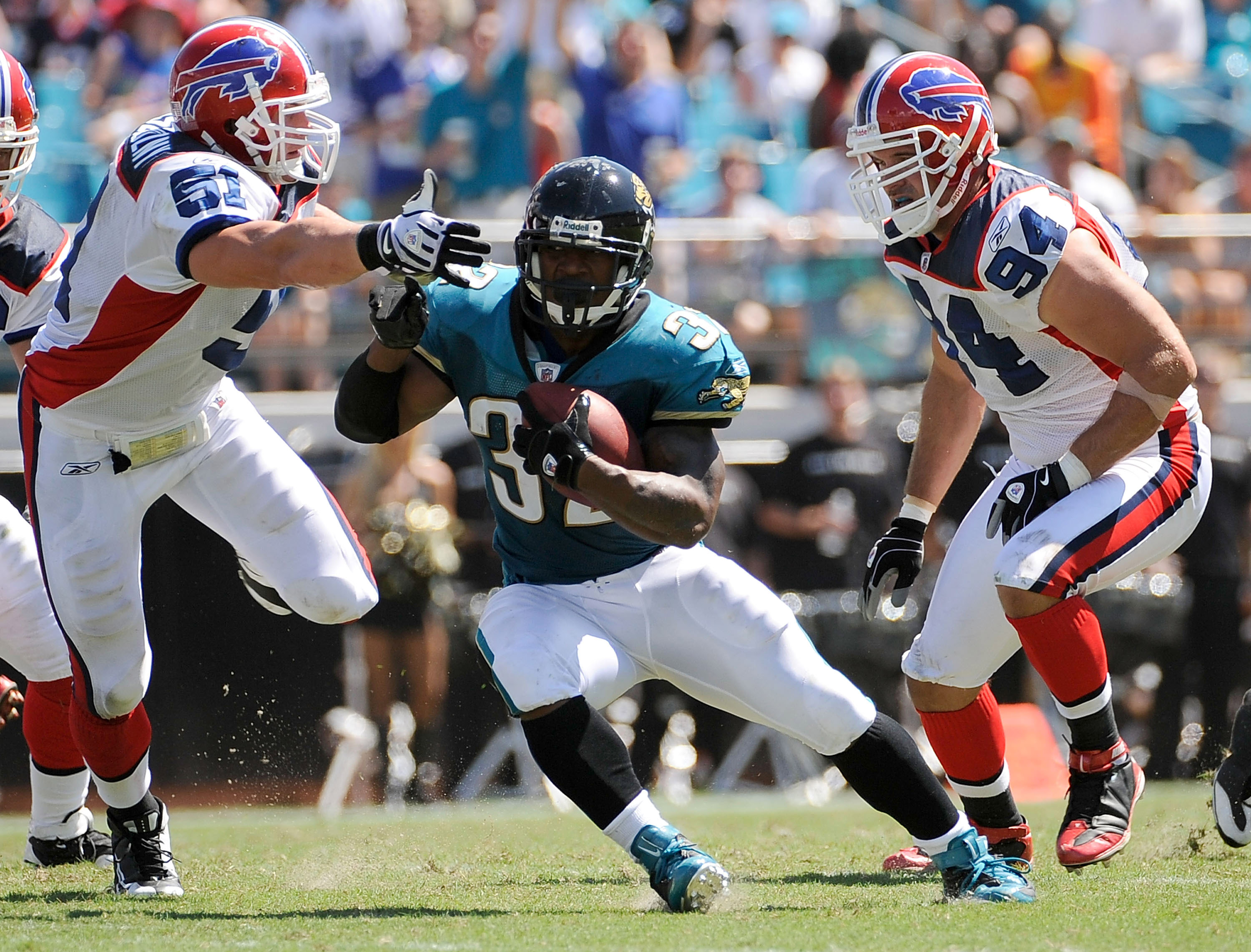
Pocket Hercules (Photo by Sam Greenwood/Getty Images)
Aaaaand I can hear the tee-hee’ing going on in Costa Mesa from here. While I’m not above making cheap jokes in order to erect a logical argument about brokerage performance, business dysfunction, and customer satisfaction, this post is actually about serious issues in real estate, technology, and marketing. So stop giggling.
We begin with a question: does the size of a brokerage matter in real estate?
I have argued in the past that the Big Broker holds the key to the future of the real estate industry, and that small independents and boutiques will end up surviving on the good graces of the various titans in their markets. Of course, that argument was counter-factual at the time I made it (over a year ago now) and I conceded that as the industry was then, big brokerages were boned. What I argued then, and still believe to some extent, is that the Big Brokerage with the will to change has the resources to do so. But in the almost year and a full quarter since I wrote that post, I don’t know that I’ve seen too many examples of such visionary brokerages.
Meanwhile, technology continues its remorseless march.
Then comes this paper by one of the pioneers of the blogosphere: Glenn Reynolds, aka, Instapundit, the Beauchamp Brogan Distinguished Professor of Law at the University of Tennessee. If you’re at all interested in the impact of technology and of the Web (and its offspring, social media) on the real estate industry, I urge you to read it in full. While it is a scholarly paper published in a law review, it’s written in plain English for the layman, and does not deal with legal issues as much as it does with business and social issues.
The implications are profound, and the questions Reynolds raise are significant. And insofar as law is the epitome of professional services, and one that many realtors look to as an example of client-driven professional services, changes in the legal business model are something we should pay close attention to.
This will be a multi-part post, as the topic is large enough and complex enough to warrant breaking up into bite-size pieces. This first part focuses on understanding Reynolds’s argument as it applies to law firms, then extrapolating similarities to real estate brokerages.
The Reynolds Argument in Brief
Much of what Reynolds published in the Hofstra Law Review article comes from his book, An Army of Davids. He posits that advances in technology, particularly computing, telecommunications, and the Internet, create efficiencies for small companies or even individuals that allow them to beat much larger competitors in the marketplace. This, we’ve heard, ever since the first PC was shipped to the first customer.
What few of us have thought about is where Reynolds goes next:
This observation is commonplace now, of course, but its implications for Galbraith-era economics have gotten somewhat less attention. It‟s not just that fewer people can do the same work; it’s that they don’t need a big company to provide the infrastructure to do the work, and, perhaps even more importantly, they may be far more efficient without the big company and all the inefficiencies and stumbling blocks that its bureaucracy and “technostructure” tend to produce.
Those inefficiencies were present in Galbraith’s day, too, of course. People have been making jokes about office politics and bureaucratic idiocies since long before Dilbert. But in the old days, you had to put up with those problems because you needed the big organization to do the job. Now, increasingly, you don’t. Goliath’s clumsiness used to be made up for by the fact that he was strong. But now the Davids are muscling up without bulking up. So why be a Goliath? (p.105 in the PDF article; emphasis in original)
He points out that at the dawn and the height of the Industrial Age, size equaled efficiency: “You can’t run a railroad as a family business” (p. 103) But he also points out that the age of Big Companies was a departure from the historical norm:
Big organizations doing big things: it’s the story of the nineteenth and twentieth centuries. In fact, it was so much the theme of those centuries that it’s easy to forget what a departure this was from the rest of human history. But it was a huge departure, brought about by the confluence of some unusual technological and social developments.
The advances in technology, and the shift away from an industrial manufacturing-based economy to a knowledge information-based economy, brings things back to the pre-industrial era of artisans, cottage industry, and small businesses.
Size and the Law Firm
Home of Cravath, Swaine & Moore
In the second part of his paper, Reynolds argues that the efficiencies that the big law firms brought to the table in the 19th and 20th centuries (the height of industrial economies) no longer exist:
Like the clients, law firms were taking advantage of economies of scale and scope. A large firm could spread the costs of big investments—at first, a law library, later things like secretarial pools, duplication equipment, and expensive computerized research services—across a large number of attorneys. And, because of its size, it could maintain in-house expertise on a large number of subjects, allowing it to meet clients’ needs for advice on subjects ranging from bankruptcy to intellectual property to labor and employment, without the client having to search out these experts on its own. Big clients and big law firms went together because both were taking advantage of the efficiencies brought about through bigness—efficiencies that outweighed the undeniable costs that bigness also brought.
But in looking at big law firms today, it’s worth asking whether technology has eroded the advantages that once accrued to size. What, exactly, do big law firms bring to the table?
In essence, it seems to me, they bring two things: reputation and resources.
Reputation (or brand) is simply a way by which clients can rely on a big established prestigious firm’s screening processes to hire competent attorneys. It’s the same reason why big law firms tend to hire at the top ranked law schools: it makes the search for smart competent lawyers more efficient. (Although I could question the logic of relying on credentials alone….)
Resources refers to things like a large support staff (paralegals, typists, messengers, etc.) that perhaps makes an attorney’s work more efficient. The less time your expensive attorney spends filling out form letters, the better off you are as the client (or so the theory goes).
Reynolds then goes on to theorize that other institutions, such as law schools, could provide the branding service that big law firms currently provide. For example, an online directory of Yale Law School graduates broken down by practice area, years of experience, and so on, would make it easier for clients to find attorneys who carry the reputation/brand of their alma mater rather than of their firm. Combined with advances in information technology like Lexis and Westlaw that render the big libraries of the big firms irrelevant, and telecommunications technology like email that renders the fleet of messengers of the big firms nonessential, it is now entirely possible that a solo practitioner working out of his home could produce legal work on par with the best of the big law firms at a fraction of the price.
Sound familiar yet?
Size and the Real Estate Brokerage
I’m struck by the parallels between the description of the big law firms in the Industrial Age and the big brokerages in the same period. There was a time when size drove efficiency in both. For example, when information technology was expensive, the larger firms had the resources to deploy things like databases, computers, and local area networks while the small boutiques simply couldn’t afford to do so.
Even in areas where real estate differs from lawyers, such as advertising (most attorney advertising is sharply restricted by law), in the Industrial era, there was a significant advantage to the purchasing power of a big real estate company. For example, when newspaper advertising was the primary was to advertise a home for sale to consumers, the ability for a large firm to negotiate a 30-40% volume discount off of standard rates constituted a major competitive advantage.
All of these advantages, like the law firms’ one-time advantage of a fully staffed large in-house library, have become significantly less important with the advent of technology. Even today, there may be discounts available to the large brokers (or large franchise networks) for online advertising; but the advantage, if any, tends to be small enough to be outweighed by the cost of the bureaucracy and the overhead that size tends to incur.
Furthermore, inherent in the practice of real estate brokerage is a lack of economies of scale that goes beyond even what other professional services like law possesses. As Reynolds says, big organizations do big things. But residential real estate is inherently small: it’s usually one family buying or selling one home. The advantage of bigness was tenuous to begin with, and changes to business realities have driven that point home.
Note that “big real estate” still achieves efficiency from big real estate firms. For example, for very large commercial real estate projects, a boutique is not likely to be able to match up to the capabilities of a CBRE. For very large homebuilders, such as Pulte or Lennar, it may be more efficient to find a single big real estate company who can bring a legion of agents, support staff, and so on to take on a project like selling 4,000 units across multiple states.
But for the most part, residential real estate is a one-to-one, small scale transaction where the size of the firm never added much in the way of efficiency. In the post-industrial world, that problem is magnified.
It used to be — and there may still be some evidence of life in this — that the big brokerages could spend more money on branding and brand advertising such that when a consumer gets around to wanting to buy or sell a house, the name that would pop into his head is that of the big brand. But the general sentiment around the industry is that the brand of the brokerage doesn’t matter one bit. Of course, that post (and the NAR study quoted in it) conflicts with studies like this one from Century 21 that suggests that brand awareness does matter.
What one could say with a degree of certainty, however, is that whether brand does or does not matter, the branding advantage that bigness might have conferred is no longer as large as it once may have been. (In a sense, as we’ll see in the next part, the hoopla around real estate brand is entirely misplaced. It would be more accurate to say that whether brand matters or not to the consumer is almost entirely incidental.)
And the parallels continue even in possible solutions.
Reynolds thinks that perhaps Bar Associations or law schools might provide the kind of reputational filtering that big law firms provide today to help clients find quality lawyers. A fairly significant number of people in real estate believe that it is the MLS (Multiple Listing Service), or consumer rating websites, or Associations such as NAR, that could provide reputational filtering. Houston Association of REALTORS recently decided to put realtor performance metrics online, drawing heavy praise from the guys at 1000watt (and yours truly as well).
Whether HAR’s move is good or not is secondary; the interesting thing is that both Reynolds and Boero both believe that the solution to the problem of reputational filtering should come from outside the law firm or brokerages. Neither believes, I think, that law should disappear as a profession, or that realtors be disintermediated. They both believe that the attorney and the realtor provide value to the consumer. It’s just that they don’t think that big law firms and big brokerages do.
Real Estate is Ahead of Law
The post-industrial, post-big, post-Goliath vision that Reynolds has for the legal profession is starting to be the norm within real estate. As much as realtors look to lawyers for things like client service philosophy, fiduciary responsibility, respectability, and the like… in this one case, lawyers could learn a lot from realtors. Many realtors are already free agents in all but name. Even if they are affiliated with a big real estate brokerage, they don’t report into the office, they don’t rely on the big infrastructure advantage, and have returned to the pre-industrial, artisanal way of doing things.
Such independence brings challenges and problems of its own, of course, and as lawyers might be looking over the horizon at what the future of the law firm looks like, they might look at real estate companies very carefully.
Next…
In the next part, we’ll examine some fundamental ways in which Big Law and Big Real Estate differ from each other, and the consequences of that difference.
Managing Partner of 7DS Associates, and the grand poobah of this here blog. Once called "a revolutionary in a really nice suit", people often wonder what I do for a living because I have the temerity to not talk about my clients and my work for clients. Suffice to say that I do strategy work for some of the largest organizations and companies in real estate, as well as some of the smallest startups and agent teams, but usually only on projects that interest me with big implications for reforming this wonderful, crazy, lovable yet frustrating real estate industry of ours.
Get NotoriousROB in your Inbox
20 thoughts on “Does Size Matter? (Part 1)”
Rob,
Another great, provocative post.
You've brought several key points to light in this post that I've not read anywhere else before. And I absolutely agree that the “law firm/real estate” comparison is intellectually and logically valid.
I look forward to the rest of your series on this topic. This “size” issue is central and fundamental to the future of the real estate industry.
To me, the key metric of “real estate 1.0” was “agent count.” All other measures be damned. The answer to every problem? Recruit more warm bodies!
The key metric of “real estate 2.0” will be “revenue per agent.”
I see the optimal future brokerage model as a small or virtual office with 20 agents selling $5M per year each. As opposed to the traditional model of massive overhead, with 100 agents averaging $1M each.
The ROI of the 2.0 model will be dramatically higher because of the reduced overhead alone. Technology makes this realistically achievable. And as agent awareness that “big branding” truly WAS an illusion becomes more widespread – and I think that reality is finally gaining some traction – this will increase the momentum away from the big boxes.
With fewer people to manage (and, by logical extension, a lot less “HR inefficiency”), the broker of the future can truly focus on aiding and abetting his agents to make more money.
Suddenly, agent and broker might kinda/sorta…can I say this out loud?…be on the same page?
This is an excellent post! Great insight. I look forward to the subsequent parts.
Aloha, Tehane
Nice work. I'll have to do some reading and thinking.
What pops into my head is that there's no doubt technology empowers the more entrepreneurial brokers and agents to fly solo or in compact packs of efficiency and excellence.
I think that it doesn't matter if you're a big broker or a tiny broker or in-between, if you suck, and you head's in the sand, you're gonna go bye-bye. Technology or not, it's simply too competitive.
I think any size broker who delivers the goods and um, er, pleases their clients and agents, will succeed. There are legions of very good agents, good as in honest, trustworthy, effective and knowledgeable, who don't sell millions or dozens of properties in year, they don't win any Top Producer Awards, but their clients love them. I believe that while the vast majority of these people are semi-entrepeneurial, or they wouldn't be in the real estate business, but they aren't extremely entrepreneurial. These fine folks don't want to own their own brokerage of 1 or dozen. I believe they feel they find security, safety and the support they perceive they need in a larger, professionally managed, well led firm. There is room for all well run operations.
The size of the brokerage doesn't matter and the brand doesn't matter, leadership, commitment, imagination and execution matter. If you're a loser, size and brand won't help you, it's the same if you're solo or small. How often do you see a Brand dominate in one market and scorned in another. It all depends on talent.
The flip side to technology empowering small tribes of real estate agent is that it's empowered a growing army of, it's all online, work unsupervised, pay your subscription fees, do what you want, just don't kill anyone or otherwise break the law. It's embarrassing, their is an odd upside, it's easier to shine like a diamond when you're standing next to dirt clod.
Having said all that, hopefully I will keep my eyes, ears and mind open and observant. Any way you cut it, it's a loud Jungle out there.
Thanks for sharing.
Realtors and law firms and Michael's real estate 2.0 comment … to me, from what I have witnessed, translate to “revenue and liability per agent.” As well it should. 😉
Two points. 1- Yes, big brokerages have the funds/resources to implement wide-ranging plans to adjust as technology advances. However, 2- smaller/boutique brokers have a much easier time in maneuvering/adapting to changes in the market and the role of technology. It's the same principles as to why guerilla warfare is so effective when you have a smaller force: you can move and adapt much easier than a big army.
As we continue this evolution, I remain (selfishly so) convinced that big is not just “not better” but worse for the productive, forward-thinking agents/realtors.
– Brand and reputation management is *much* more efficient with ~25 or fewer agents – (R)Evoluton is easier with a smaller brand; getting buy-in to test, change, move is easier. – Essentially, those of us in the independent contractor world are all competitors with each other; this makes creates tension when towards a common goal – building a successful brand. But … if the agents were employees …
…if a big brand could implement effective and responsive systems management and a process for listing homes, I believe that the next step for bigger brands is the employee model. By choosing to hire great people who are less entrepreneurial (notthattheresanythingwrongwiththat) the big brands could guide and direct their people in the best manner possible … and the employees would have to listen.
Further contradicting myself … big brands *can* and should matter. The fact is that they don't and I don't think the legacy ones can. The only way I see a big brand mattering is to start one fresh without the legacy leadership/culture/baggage. And when I say fresh, I mean from scratch, not re-branding/buying into a brokerage or brokerage model, I mean from blood, sweat and tears so that the brand matters from Day One.
Lastly, I think that segmenting residential real estate from the rest is key, because it is relationship- and skill-driven. If this were just about numbers and data, bigger might be better due to their potentially greater resources.
Very interesting article, Rob. It seems to me that the majority of big brand real estate firms that I am aware of are really very small, independently owned franchise operations. There are very few big real estate shops. Most of the largest of these franchises probably “employ” less than 200 people.
Furthermore, while technology offers the leverage for real estate professionals to provide extraordinary services to their clients, the vast majority seem to have no interest or idea on how to implement and use it.
Thanks for sharing your thoughts,
Joe Sheehan
Rob,
Nice post as usual. On a tangentially-related point, I'm sure you're amused by the issues the big law firms are having with work in the financial services sector because of rules governing conflicts of interest: http://online.wsj.com/article/SB100014240527023…. These rules result in the scale of a large firm to be a surprising impediment in these cases.
Take care
NITHI
Rob, as always you bring deep, thoughtful content to the surface for the rest of us who depend on you to do it. Obviously, it would be preferable if you would utilize the http://www.century21.com media center version links http://www.century21.com/aboutus/news.jsp?id=81 when referencing our survey work, but thank you just the same for including it.
I think the exploration of what the real estate model of the future looks like is fascinating. I understand all the arguments with regard to agents depending on the “big brand” for legal, office and administrative support; however, to put out a blanket statement like “But the general sentiment around the industry is that the brand of the brokerage doesn’t matter one bit,” is just not backed up by any facts.
I get the sense that the entire piece centers on how technology has leveled he playing field in service / knowledge based industries to the point where the qualified individual doesn't need any brand or branding to be successful. I think the executives on Madison Ave. would disagree. The piece seems to hint that brands and brand value in general are quickly becoming a thing of the past. I just don't agree with this sentiment. As the franchisor of the world’s largest residential real estate sales organization, Century 21 Real Estate continues to provide advantages of scale when it comes to online marketing and technology platforms.
In my opinion the brand and the agent work hand in hand to provide the consumer with the best possible experience. The brand continues to attract consumers to visit offices, pick up the phone, complete an online contact form or send an email and the performance of the broker and agent fulfill the brand value proposition.
I applaud HAR for their efforts to espouse transparency for agent performance.
Hey Matt — thanks for the comment. You know, I could have sworn I wrote something like, “such sentiments are unfair and not grounded in provable facts” referring to the general statement. I think I must have deleted that in editing that part down a bit….
You're right; as yet, no one really knows whether brands do or don't matter. More importantly, it is unclear if we're even talking about the same thing when we say that a brand “matters”. This is something I'd like to get into more in the next two parts.
Give Rick my best regards. 🙂
-rsh
True, what you say about franchisees. I was thinking more of the actual Big Brokerages like a Long & Foster or Weichert, and less of the franchise brands like Coldwell Banker and Century 21.
As for realtors who have no interest or idea on how to use it… well, they'd be in the same boat no matter what size the brokerage firm is. 🙂
-rsh
Couple quick thoughts…
1. I agree with the general premise of your post…with the industrial age now firmly in the past and the information age tearing at conventional real estate practices across the board, especially at 'Big Real Estate'…disintermediation and the term (from the book of the same name) Blown To Bits rings loud and clear.
2. Really, my only contention with what you have written here, Rob, is your choice of photos, which I don't think plays to the points of your post. You have one Maurice Jones Drew, a small running back by NFL standards, indeed. But he's running against the Buffalo Bills not so vaunted defense. So surely you could have found a picture of MJD running against say the Ravens or even your dear Jersey/2, err, I mean Jets defense to better illustrate your point.
**Disclaimer: I'm a Buffalo Bills fan. And I have this feeling Rob was sitting back laughing when he chose this photo. Thanks Rob.
Dude, that's Posluzny and Stroud that MJD is running past… the Bills defense might be meh, but those two guys are rock-solid.
🙂
I'll trade you Vernon Gholston and Matt Kroul for Pos and Stroud every day of the week, and twice on weekends….
-rsh
Thats Pos and Aaron Schobel, the latter of which is still no slouch. Point taken, like castor oil…*sigh*
You can keep Ghost-on and who ever Matt Kroul is, we're trying to upgrade to respectability my man…
This is an awesome article! I agree with the points you make here. One thing I think you could explore a bit more is the effect of “big brands” on the quality of agents. In other words, if well known big brokerages are attracting more of the top talent, does that fact – in combination with the brand recognition itself – come into play in garnering more of the market share? Where do the most skilled and productive agents choose to hang their license? Large brokerages have relied, from my observation, on high body counts of new and low producing agents and retaining an aging agent population that have long term relationships that produce repeat business and referrals.
I do agree that all of this is changing – quickly. There is less and less advantage to being large, and the staggering operational overhead means turning to sources outside the transaction itself for company dollar. If there is an advantage at all to large brokerage, it's their spin-off of affiliated services in mortgage, title, insurance, etc. for the profit margins. Small brokerages and independents are literally living off the dollar generated on the transaction itself. Big brokerage has developed additional streams of revenue. Just thought I would toss that out for consideration.
This is an awesome article! I agree with the points you make here. One thing I think you could explore a bit more is the effect of “big brands” on the quality of agents. In other words, if well known big brokerages are attracting more of the top talent, does that fact – in combination with the brand recognition itself – come into play in garnering more of the market share? Where do the most skilled and productive agents choose to hang their license? Large brokerages have relied, from my observation, on high body counts of new and low producing agents and retaining an aging agent population that have long term relationships that produce repeat business and referrals.
I do agree that all of this is changing – quickly. There is less and less advantage to being large, and the staggering operational overhead means turning to sources outside the transaction itself for company dollar. If there is an advantage at all to large brokerage, it's their spin-off of affiliated services in mortgage, title, insurance, etc. for the profit margins. Small brokerages and independents are literally living off the dollar generated on the transaction itself. Big brokerage has developed additional streams of revenue. Just thought I would toss that out for consideration.


 Even in areas where real estate differs from lawyers, such as advertising (most attorney advertising is sharply restricted by law), in the Industrial era, there was a significant advantage to the purchasing power of a big real estate company. For example, when newspaper advertising was the primary was to advertise a home for sale to consumers, the ability for a large firm to negotiate a 30-40% volume discount off of standard rates constituted a major competitive advantage.

20 thoughts on “Does Size Matter? (Part 1)”
Rob,
Another great, provocative post.
You've brought several key points to light in this post that I've not read anywhere else before. And I absolutely agree that the “law firm/real estate” comparison is intellectually and logically valid.
I look forward to the rest of your series on this topic. This “size” issue is central and fundamental to the future of the real estate industry.
To me, the key metric of “real estate 1.0” was “agent count.” All other measures be damned. The answer to every problem? Recruit more warm bodies!
The key metric of “real estate 2.0” will be “revenue per agent.”
I see the optimal future brokerage model as a small or virtual office with 20 agents selling $5M per year each. As opposed to the traditional model of massive overhead, with 100 agents averaging $1M each.
The ROI of the 2.0 model will be dramatically higher because of the reduced overhead alone. Technology makes this realistically achievable. And as agent awareness that “big branding” truly WAS an illusion becomes more widespread – and I think that reality is finally gaining some traction – this will increase the momentum away from the big boxes.
With fewer people to manage (and, by logical extension, a lot less “HR inefficiency”), the broker of the future can truly focus on aiding and abetting his agents to make more money.
Suddenly, agent and broker might kinda/sorta…can I say this out loud?…be on the same page?
I have some additional thoughts specific to the “does size matter” issue in the blog posts I wrote at http://p1fran.com/2010/02/rtb-bigger-is-worserer/ and http://p1fran.com/2010/03/big-box-brouhaha/.
Best,
Michael
This is an excellent post! Great insight. I look forward to the subsequent parts.
Aloha,
Tehane
Nice work. I'll have to do some reading and thinking.
What pops into my head is that there's no doubt technology empowers the more entrepreneurial brokers and agents to fly solo or in compact packs of efficiency and excellence.
I think that it doesn't matter if you're a big broker or a tiny broker or in-between, if you suck, and you head's in the sand, you're gonna go bye-bye. Technology or not, it's simply too competitive.
I think any size broker who delivers the goods and um, er, pleases their clients and agents, will succeed. There are legions of very good agents, good as in honest, trustworthy, effective and knowledgeable, who don't sell millions or dozens of properties in year, they don't win any Top Producer Awards, but their clients love them. I believe that while the vast majority of these people are semi-entrepeneurial, or they wouldn't be in the real estate business, but they aren't extremely entrepreneurial. These fine folks don't want to own their own brokerage of 1 or dozen. I believe they feel they find security, safety and the support they perceive they need in a larger, professionally managed, well led firm. There is room for all well run operations.
The size of the brokerage doesn't matter and the brand doesn't matter, leadership, commitment, imagination and execution matter. If you're a loser, size and brand won't help you, it's the same if you're solo or small. How often do you see a Brand dominate in one market and scorned in another. It all depends on talent.
The flip side to technology empowering small tribes of real estate agent is that it's empowered a growing army of, it's all online, work unsupervised, pay your subscription fees, do what you want, just don't kill anyone or otherwise break the law. It's embarrassing, their is an odd upside, it's easier to shine like a diamond when you're standing next to dirt clod.
Having said all that, hopefully I will keep my eyes, ears and mind open and observant. Any way you cut it, it's a loud Jungle out there.
Thanks for sharing.
Realtors and law firms and Michael's real estate 2.0 comment … to me, from what I have witnessed, translate to “revenue and liability per agent.” As well it should. 😉
Two points. 1- Yes, big brokerages have the funds/resources to implement wide-ranging plans to adjust as technology advances. However, 2- smaller/boutique brokers have a much easier time in maneuvering/adapting to changes in the market and the role of technology. It's the same principles as to why guerilla warfare is so effective when you have a smaller force: you can move and adapt much easier than a big army.
As we continue this evolution, I remain (selfishly so) convinced that big is not just “not better” but worse for the productive, forward-thinking agents/realtors.
– Brand and reputation management is *much* more efficient with ~25 or fewer agents
– (R)Evoluton is easier with a smaller brand; getting buy-in to test, change, move is easier.
– Essentially, those of us in the independent contractor world are all competitors with each other; this makes creates tension when towards a common goal – building a successful brand. But … if the agents were employees …
…if a big brand could implement effective and responsive systems management and a process for listing homes, I believe that the next step for bigger brands is the employee model. By choosing to hire great people who are less entrepreneurial (notthattheresanythingwrongwiththat) the big brands could guide and direct their people in the best manner possible … and the employees would have to listen.
Further contradicting myself … big brands *can* and should matter. The fact is that they don't and I don't think the legacy ones can. The only way I see a big brand mattering is to start one fresh without the legacy leadership/culture/baggage. And when I say fresh, I mean from scratch, not re-branding/buying into a brokerage or brokerage model, I mean from blood, sweat and tears so that the brand matters from Day One.
Lastly, I think that segmenting residential real estate from the rest is key, because it is relationship- and skill-driven. If this were just about numbers and data, bigger might be better due to their potentially greater resources.
Very interesting article, Rob. It seems to me that the majority of big brand real estate firms that I am aware of are really very small, independently owned franchise operations. There are very few big real estate shops. Most of the largest of these franchises probably “employ” less than 200 people.
Furthermore, while technology offers the leverage for real estate professionals to provide extraordinary services to their clients, the vast majority seem to have no interest or idea on how to implement and use it.
Thanks for sharing your thoughts,
Joe Sheehan
Rob,
Nice post as usual. On a tangentially-related point, I'm sure you're amused by the issues the big law firms are having with work in the financial services sector because of rules governing conflicts of interest: http://online.wsj.com/article/SB100014240527023…. These rules result in the scale of a large firm to be a surprising impediment in these cases.
Take care
NITHI
Rob, as always you bring deep, thoughtful content to the surface for the rest of us who depend on you to do it. Obviously, it would be preferable if you would utilize the http://www.century21.com media center version links http://www.century21.com/aboutus/news.jsp?id=81 when referencing our survey work, but thank you just the same for including it.
I think the exploration of what the real estate model of the future looks like is fascinating. I understand all the arguments with regard to agents depending on the “big brand” for legal, office and administrative support; however, to put out a blanket statement like “But the general sentiment around the industry is that the brand of the brokerage doesn’t matter one bit,” is just not backed up by any facts.
I get the sense that the entire piece centers on how technology has leveled he playing field in service / knowledge based industries to the point where the qualified individual doesn't need any brand or branding to be successful. I think the executives on Madison Ave. would disagree. The piece seems to hint that brands and brand value in general are quickly becoming a thing of the past. I just don't agree with this sentiment. As the franchisor of the world’s largest residential real estate sales organization, Century 21 Real Estate continues to provide advantages of scale when it comes to online marketing and technology platforms.
In my opinion the brand and the agent work hand in hand to provide the consumer with the best possible experience. The brand continues to attract consumers to visit offices, pick up the phone, complete an online contact form or send an email and the performance of the broker and agent fulfill the brand value proposition.
I applaud HAR for their efforts to espouse transparency for agent performance.
Hey Matt — thanks for the comment. You know, I could have sworn I wrote something like, “such sentiments are unfair and not grounded in provable facts” referring to the general statement. I think I must have deleted that in editing that part down a bit….
You're right; as yet, no one really knows whether brands do or don't matter. More importantly, it is unclear if we're even talking about the same thing when we say that a brand “matters”. This is something I'd like to get into more in the next two parts.
Give Rick my best regards. 🙂
-rsh
True, what you say about franchisees. I was thinking more of the actual Big Brokerages like a Long & Foster or Weichert, and less of the franchise brands like Coldwell Banker and Century 21.
As for realtors who have no interest or idea on how to use it… well, they'd be in the same boat no matter what size the brokerage firm is. 🙂
-rsh
Couple quick thoughts…
1. I agree with the general premise of your post…with the industrial age now firmly in the past and the information age tearing at conventional real estate practices across the board, especially at 'Big Real Estate'…disintermediation and the term (from the book of the same name) Blown To Bits rings loud and clear.
2. Really, my only contention with what you have written here, Rob, is your choice of photos, which I don't think plays to the points of your post. You have one Maurice Jones Drew, a small running back by NFL standards, indeed. But he's running against the Buffalo Bills not so vaunted defense. So surely you could have found a picture of MJD running against say the Ravens or even your dear Jersey/2, err, I mean Jets defense to better illustrate your point.
**Disclaimer: I'm a Buffalo Bills fan. And I have this feeling Rob was sitting back laughing when he chose this photo. Thanks Rob.
Dude, that's Posluzny and Stroud that MJD is running past… the Bills defense might be meh, but those two guys are rock-solid.
🙂
I'll trade you Vernon Gholston and Matt Kroul for Pos and Stroud every day of the week, and twice on weekends….
-rsh
Thats Pos and Aaron Schobel, the latter of which is still no slouch. Point taken, like castor oil…*sigh*
You can keep Ghost-on and who ever Matt Kroul is, we're trying to upgrade to respectability my man…
This is an awesome article! I agree with the points you make here. One thing I think you could explore a bit more is the effect of “big brands” on the quality of agents. In other words, if well known big brokerages are attracting more of the top talent, does that fact – in combination with the brand recognition itself – come into play in garnering more of the market share? Where do the most skilled and productive agents choose to hang their license? Large brokerages have relied, from my observation, on high body counts of new and low producing agents and retaining an aging agent population that have long term relationships that produce repeat business and referrals.
I do agree that all of this is changing – quickly. There is less and less advantage to being large, and the staggering operational overhead means turning to sources outside the transaction itself for company dollar. If there is an advantage at all to large brokerage, it's their spin-off of affiliated services in mortgage, title, insurance, etc. for the profit margins. Small brokerages and independents are literally living off the dollar generated on the transaction itself. Big brokerage has developed additional streams of revenue. Just thought I would toss that out for consideration.
This is an awesome article! I agree with the points you make here. One thing I think you could explore a bit more is the effect of “big brands” on the quality of agents. In other words, if well known big brokerages are attracting more of the top talent, does that fact – in combination with the brand recognition itself – come into play in garnering more of the market share? Where do the most skilled and productive agents choose to hang their license? Large brokerages have relied, from my observation, on high body counts of new and low producing agents and retaining an aging agent population that have long term relationships that produce repeat business and referrals.
I do agree that all of this is changing – quickly. There is less and less advantage to being large, and the staggering operational overhead means turning to sources outside the transaction itself for company dollar. If there is an advantage at all to large brokerage, it's their spin-off of affiliated services in mortgage, title, insurance, etc. for the profit margins. Small brokerages and independents are literally living off the dollar generated on the transaction itself. Big brokerage has developed additional streams of revenue. Just thought I would toss that out for consideration.
Comments are closed.